What Does EPG Mean? Understanding Your Horse's Worm Egg Count Results
If you've recently received your horse's worm egg count results, you may have noticed the term EPG. But what does it actually mean, and how should you use it to make decisions about worming your horse?
Understanding EPG (Eggs Per Gram) is an important part of responsible parasite control. Rather than worming routinely, a worm egg count helps determine whether treatment is actually necessary, reducing unnecessary wormer use and helping to slow the development of wormer resistance.
What Does EPG Stand For?
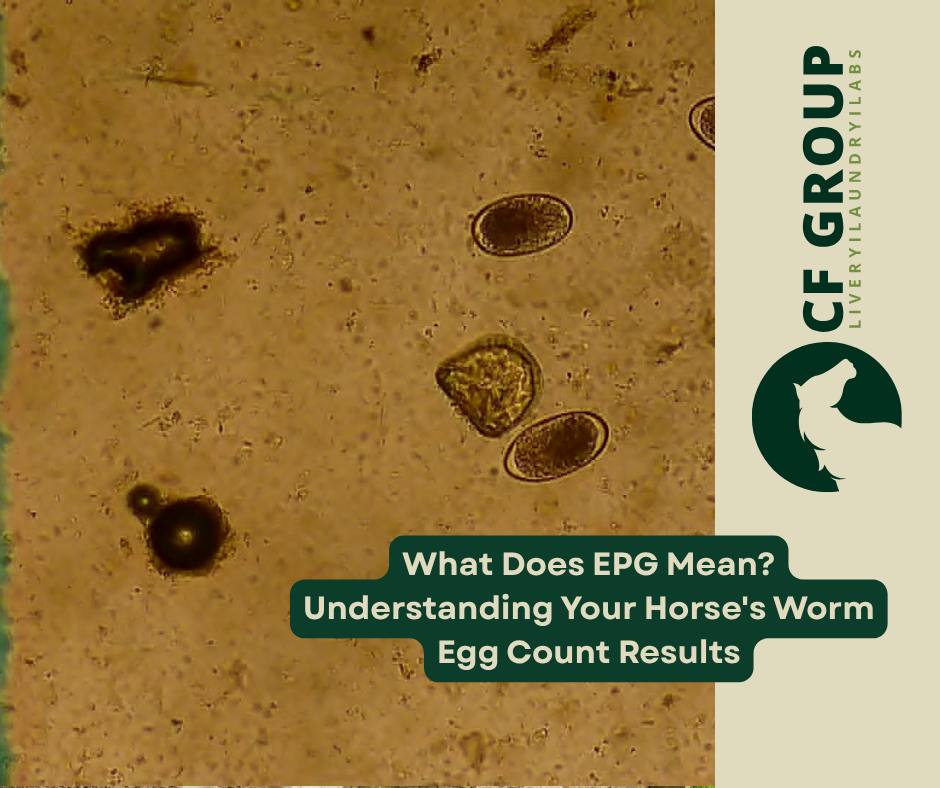
EPG stands for Eggs Per Gram. It is the number of worm eggs found in one gram of your horse's faeces during laboratory testing.
The higher the EPG, the more worm eggs are being passed by your horse. This gives an indication of how much your horse may be contributing to pasture contamination and helps determine whether treatment is recommended.
How Is EPG Measured?
A small sample of your horse's dung is examined under a microscope using a recognised laboratory technique. The number of worm eggs identified is then used to calculate the number of eggs present per gram of faeces.
The result is reported as an EPG value, such as:
- 0 EPG
- 50 EPG
- 200 EPG
- 600 EPG
These numbers help assess whether your horse is carrying egg-producing intestinal worms.
What Do Different EPG Results Mean?
Although recommendations can vary depending on the horse, season and laboratory methods, a general guide is:
0 EPG
No worm eggs were detected in the sample. This usually means worming is not required based on the worm egg count alone. However, it does not guarantee your horse is completely parasite-free, as encysted small redworm, tapeworm and pinworms are not reliably detected by a standard worm egg count.
1–199 EPG
A low egg count. Many healthy adult horses with low egg counts do not require immediate treatment, but ongoing monitoring is recommended.
200–500 EPG
A moderate egg count. Treatment may be recommended depending on your horse's age, health, grazing management and parasite control programme.
Over 500 EPG
A high egg count. Treatment is generally recommended to reduce pasture contamination and protect both your horse and others grazing alongside them.