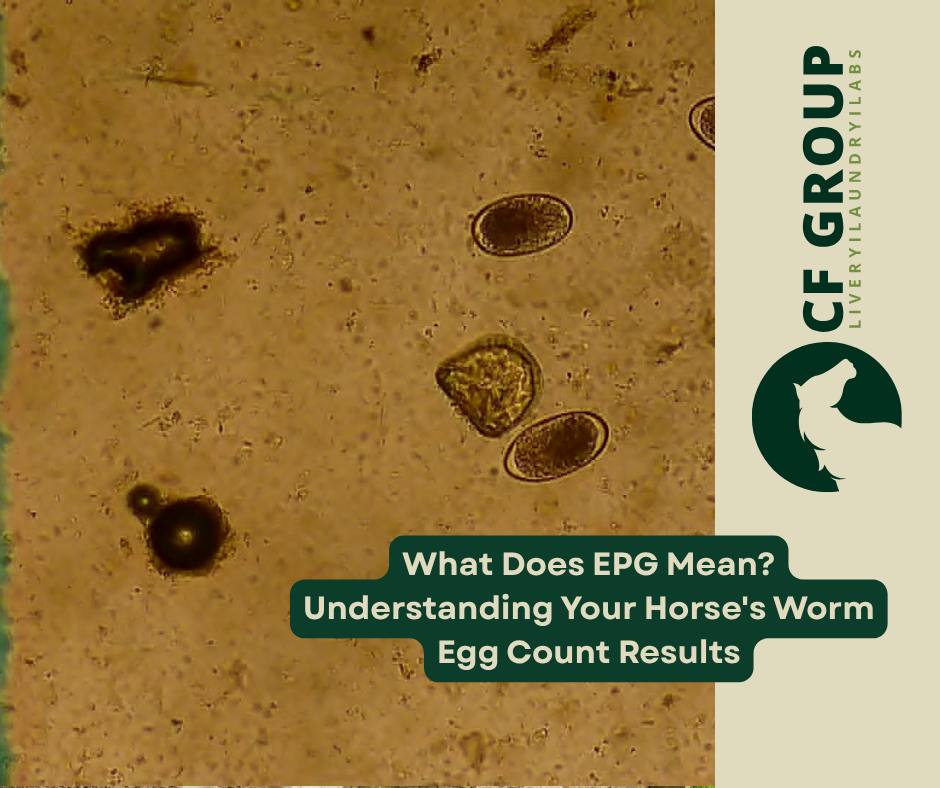

A zero worm egg count (0 EPG) means that no worm eggs were detected in the sample tested. It does not guarantee that the horse is completely free from parasites.
Here's why:
1. Encysted small redworm
This is the most important example.
Encysted small redworm larvae live within the wall of the horse's intestine and do not produce eggs, so they cannot be detected by a standard worm egg count.
This is why many targeted worming programmes recommend treatment for encysted redworm during late autumn or winter, depending on the horse's risk factors.
2. Tapeworm
Tapeworm eggs are shed intermittently and are rarely detected on a standard worm egg count.
A saliva test or blood test is the recommended way to assess tapeworm burden.
3. Pinworms (Oxyuris equi)
Pinworms lay their eggs around the horse's anus and tail rather than in the faeces, so they are not detected by a worm egg count.
If a horse is rubbing its tail, a pinworm tape test is more appropriate.
4. Pre-patent infections
If a horse has recently picked up worms, the parasites may not yet be mature enough to produce eggs.
The horse is infected, but the worm egg count will still be zero.
5. Intermittent egg shedding
Some worms don't shed eggs consistently. Although uncommon, a horse with a low worm burden may occasionally produce a false-negative result because no eggs are present in that particular sample.
Does a zero egg count mean you shouldn't worm?
Not necessarily.
A zero result should always be interpreted alongside:
- Your horse's age
- Time of year
- Previous worming history
- Grazing management
- Clinical signs
- Tapeworm testing results
- Encysted redworm risk
A targeted parasite control programme uses worm egg counts, tapeworm testing, and seasonal risk assessment together, rather than relying on one test alone.