
CF Equine Labs
Horse Worm Egg Counts and Equine Parasite Testing
Take the guesswork out of worming with reliable horse worm egg counts and equine parasite testing from CF Equine Labs.
We help horse owners, livery yards and equestrian businesses make informed decisions about parasite control. By testing before treating you can identify which horses may need worming, reduce unnecessary use of wormers and help protect their long-term effectiveness.
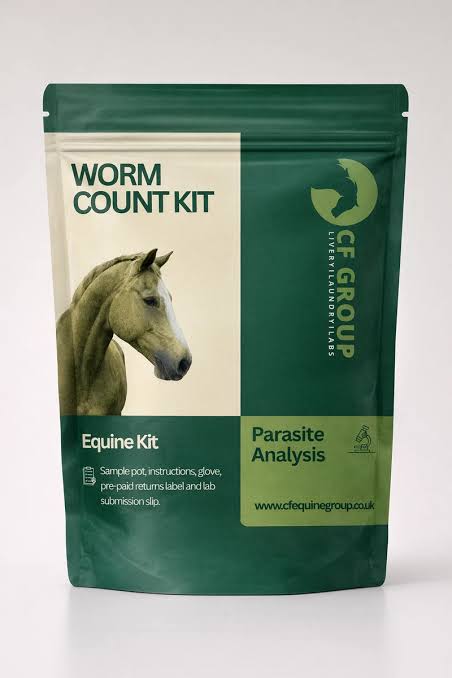
Order a postal worm count kit online, send us a sample using your own container or drop your sample directly at our laboratory near Rochdale, Lancashire.
Simple Process
How Horse Worm Egg Counting Works
Collect your sample
Collect a small, fresh sample from your horse using the instructions supplied with your kit.
Send or drop it off
Return the sample by post or deliver it directly to our laboratory at Crey Farm, Shawforth.
We test the sample
The sample is analysed by trained technicians using a recognised faecal egg counting method.
Receive your result
Your result is reported as eggs per gram (EPG) together with a clear explanation and guidance on the next steps. Results are typically returned within 48 hours.
Evidence Based
Why Test Before Worming?
Routine worming without testing can expose horses to treatments they may not need and can contribute to wormer resistance. Please see our news page for more information on resistance.
Regular horse worm egg counts can help you:
- Identify horses with significant strongyle or roundworm egg shedding
- Avoid unnecessary worming treatments
- Monitor parasite levels throughout the year
- Identify high-shedding horses within a herd
- Reduce contamination of paddocks and grazing
- Check whether a worming treatment has been effective
- Build a more responsible parasite control programme
A worm egg count does not detect every type or life stage of parasite. Testing should form part of a wider parasite control programme that considers your horse's age, history and grazing management.
Who We Help
Who Is Our Testing Suitable For?
Our horse parasite testing services are suitable for:
- Individual horse and pony owners
- Livery yards
- Stud farms and breeders
- Riding schools
- Rescue centres
- Competition yards
- Equine professionals
- Owners managing several horses together
Whether you are testing one horse or an entire yard we provide clear results and practical support.
Common Questions
Frequently Asked Questions
What does EPG mean?
EPG means eggs per gram. It refers to the estimated number of parasite eggs found in each gram of the horse's faeces.
Can a horse have worms with a zero egg count?
Yes. A zero or low worm egg count does not guarantee that a horse is completely free from all parasites. Standard faecal egg counts do not reliably detect encysted small redworm, tapeworm, bots or pinworm. The result should always be considered alongside the horse's history and wider parasite control programme.
How often should I worm count my horse?
Many horses are tested regularly throughout the grazing season. The correct schedule will depend on the horse, herd, pasture management and previous results.
Does a worm count tell me which wormer to use?
Your result helps show whether treatment may be needed for the parasites detected by the test. Any treatment decision should also consider the horse's age, health and previous worming history.
How fresh should the sample be?
The sample should be as fresh as possible. Follow the collection and posting instructions included with your test to help preserve the sample during transit.
Can you test a full livery yard?
Yes. We can test individual horses or arrange testing for larger yards and groups. Contact us to discuss yard testing and parasite management support. Discounts provided for multiple horses.
Start Testing Today