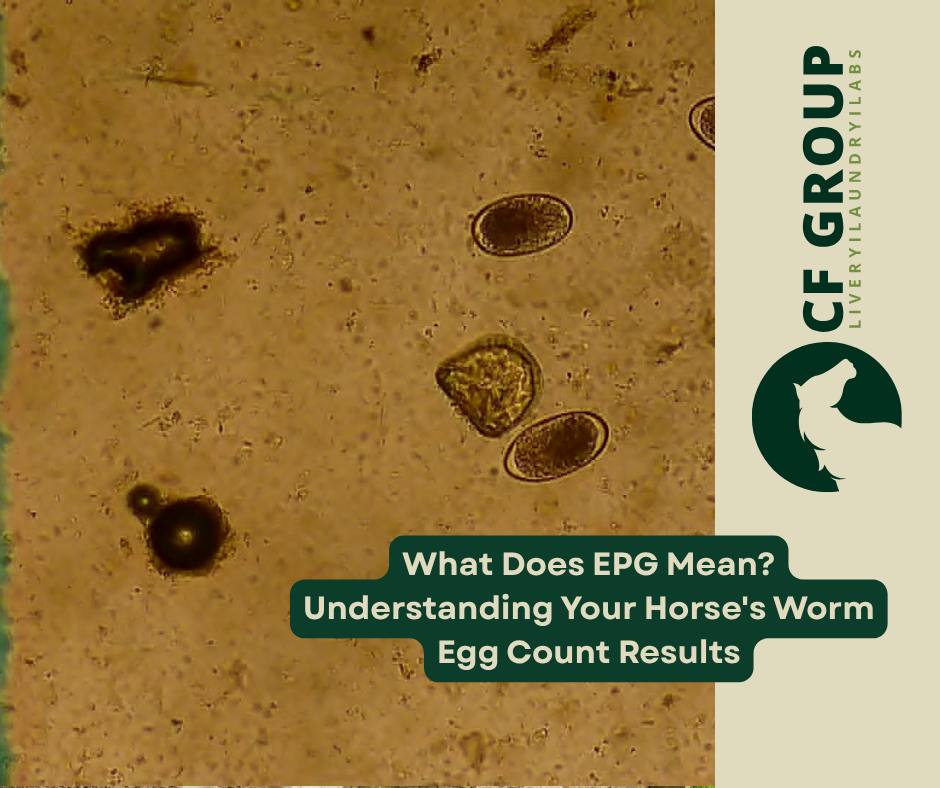
Understanding your horse’s worm egg count results is an important part of modern parasite control. Instead of routinely worming horses on a fixed schedule, best practice now recommends testing first and only treating when necessary. This targeted approach helps protect horse health while slowing the development of wormer resistance which is a growing concern in equine care. In this guide we explain what worm egg count results mean & how to interpret them.
Worm Egg Count Results Explained
Worm Egg Count Result (EPG) | What It Means | Recommended Action
0 – 250 EPG | Low egg count. Your horse is shedding very few parasite eggs onto pasture. | Usually no worming required. Continue monitoring with routine WEC testing.
250 – 500 EPG | Moderate egg count. Some eggs are being shed and may contaminate grazing. | Treatment recommended depending on your worm control plan.
500 – 1200 EPG | High egg count. A larger number of parasite eggs are present. | Worming treatment recommended to reduce parasite burden.
1200+ EPG | Very high egg count. The horse is a high shedder and can contaminate pasture quickly. | Treat promptly and consider a follow-up test to confirm treatment effectiveness.
Research shows that around 20–30% of horses are responsible for most pasture contamination, which is why targeted testing is so effective.
What Worm Egg Counts Can and Cannot Detect
While worm egg counts are extremely useful, they do not detect every type of parasite.
Parasite | Detected by WEC? | Notes
Small Redworm (Cyathostomins) | ✔ Yes | The most common parasite in adult horses.
Large Redworm | ✔ Yes | Less common today but still monitored.
Roundworm (Ascarids) | ✔ Yes | More commonly found in foals and young horses.
Tapeworm | ✖ No | Requires a saliva or blood test for accurate detection.
Encysted Small Redworm | ✖ No | Larvae live in the gut wall and do not produce eggs.
Bots | ✖ No | Usually identified by eggs on the horse’s coat.
Because of this, worm egg counts are often used alongside tapeworm testing and seasonal treatments as part of a full parasite control plan.
How Often Should Horses Have a Worm Egg Count?
Most equine parasite control programmes recommend testing every 8–12 weeks during the grazing season.
Regular testing helps:
- Identify horses that shed high numbers of eggs
- Reduce unnecessary worming treatments
- Protect the effectiveness of worming medications
- Lower parasite contamination on pasture
Good pasture management including regular poo picking and avoiding overstocked paddocks also plays a major role in controlling parasites.
Example Horse Parasite Control Programme
Time of Year | Recommended Approach
Spring to Autumn | Worm Egg Count testing every 8–12 weeks
Autumn | Tapeworm saliva or blood test
Late Autumn / Winter | Encysted redworm treatment if advised
This approach ensures horses are treated only when needed, improving both horse general health and parasite control.
Why Test Instead of Routine Worming?
Routine worming without testing was once common practice, but it has contributed to increasing parasite resistance to worming drugs.
Testing first allows horse owners to:
- Avoid unnecessary medication
- Identify high-risk horses
- Maintain effective parasite control
- Support responsible wormer use across the equine industry