Internal parasites are one of the biggest hidden threats to your horse’s health. They can quietly cause weight loss, colic, poor coat condition, diarrhoea, and in severe cases they can become life-threatening. Yet many horses are still wormed using outdated approaches that no longer protect them properly.
Correct worming is not just about giving a product, it is about using the right product, at the right time, for the right parasites.
Using the Correct Wormer at the Right Time of Year
Different parasites dominate at different times of year. A well-designed worming programme targets what your horse is most at risk from seasonally, rather than randomly.
Topic 2: Why Blanket Worming Is No Longer Safe
For many years, horses were routinely wormed every 6–8 weeks regardless of need. This practice, known as blanket worming, is now one of the biggest causes of drug-resistant worms.
Worm Resistance, A Growing Crisis
Parasites are living organisms that adapt. When the same wormers are used repeatedly:
- Susceptible worms die
- Resistant worms survive
- These resistant worms breed and spread
Over time, the drug becomes ineffective. This is already happening in the UK, with widespread resistance to several commonly used wormers.
It is commonly believed that horses treated with a blanket worming program develop resistance however this is not true. Instead, it is the parasites that become resistant, putting all horses sharing the same pasture at risk.
Once resistance develops, it cannot be reversed. This is why proper worming pactices across the board are important – Livery yards being more at risk due to owners allowing clients to adapt their own practices.
Blanket Worming Does Not Cover All Bases
Blanket worming also gives a false sense of security:
- Some wormers do not kill tapeworm
- Some do not kill encysted redworm
- Some no longer kill strongyles effectively due to resistance
So even though horses are being wormed frequently, they may still be carrying harmful parasite burdens.
The Modern Approach: Targeted Worming
The gold standard in parasite control today is:
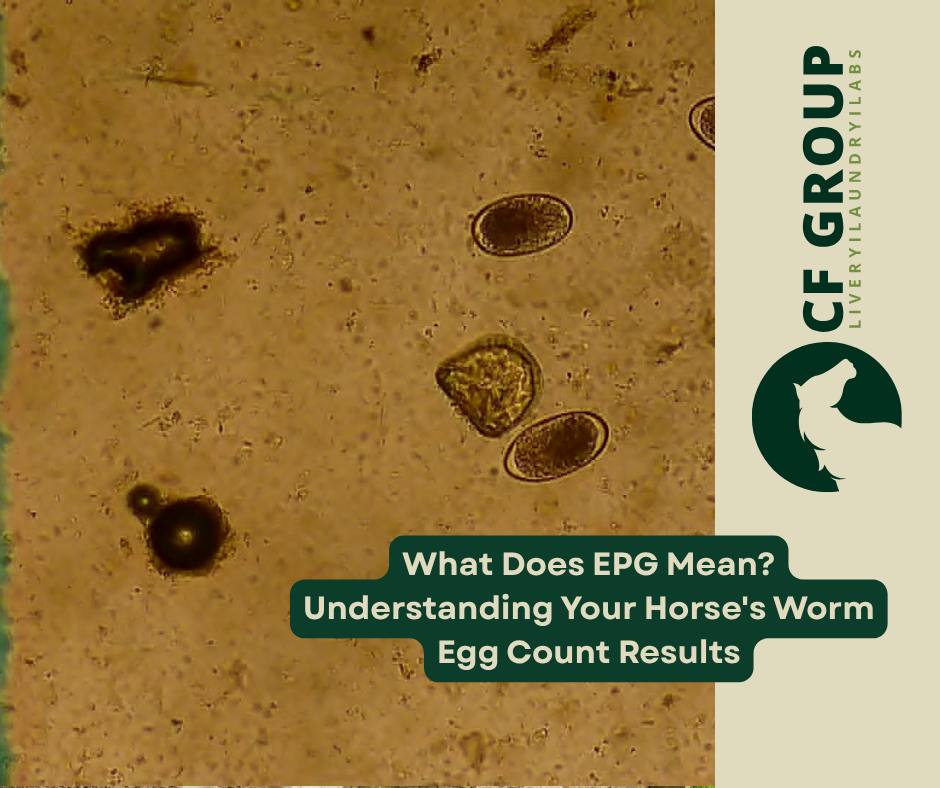
- Regular worm egg counts
- Seasonal risk-based treatments
- Targeted use of the correct wormers
This approach:
- Protects your horse’s health
- Preserves wormer effectiveness
- Reduces unnecessary drug use
- Slows the spread of resistance
I want to stress that achieving the ‘gold standard’ requires adherence to all three points. Depending exclusively on worm counts will NOT effectively target and prevent worm burdens in your horse. This is another common misconception; a zero worm count does not guarantee the absence of worms. Just like wormers, worm counts need to be conducted at the appropriate time of year.
In Summary
Correct worming is not about doing more, it is about doing it properly.
Using the right wormer at the right time of year and avoiding blanket worming is the only sustainable way to protect horses against parasites now and in the future. With resistance already rising, responsible parasite control has never been more important.
CF Equine Labs supports modern, evidence-based worming programmes that keep horses healthy and keep treatments working for years to come.